
Published: December 2024 | Reading Time: 6 minutes
Patient no-shows represent one of the most significant revenue drains in modern dental practices, with studies indicating that missed appointments cost the average dental office between $150-$300 per occurrence. When multiplied across hundreds of appointments annually, these losses can reach tens of thousands of dollars, directly impacting practice profitability and patient care continuity. The emergence of artificial intelligence in dental practice management has introduced revolutionary solutions to this persistent challenge, offering data-driven approaches that dramatically outperform traditional reminder methods.
The financial implications extend beyond immediate revenue loss. No-shows create cascading effects including underutilized chair time, reduced staff productivity, and increased administrative burden from rescheduling efforts. More critically, they disrupt treatment continuity, potentially compromising patient outcomes and satisfaction. As dental practices increasingly embrace technology-driven solutions, AI-powered patient retention systems have emerged as game-changing tools for addressing these multifaceted challenges.
How Can AI Reduce Dental No-Shows?
Artificial intelligence transforms no-show prevention through sophisticated behavioral analysis and predictive modeling that goes far beyond simple appointment reminders. AI systems analyze vast datasets encompassing patient demographics, appointment history, seasonal patterns, and behavioral indicators to identify high-risk appointments before they occur. This proactive approach enables practices to implement targeted interventions rather than relying on generic reminder protocols.
Advanced AI platforms utilize machine learning algorithms to continuously refine their prediction accuracy. By examining factors such as appointment timing, patient age, treatment type, weather patterns, and historical attendance rates, these systems create risk profiles for individual patients. For instance, AI might identify that patients scheduling Monday morning appointments after a holiday weekend show 40% higher no-show rates, prompting additional confirmation protocols for these bookings.
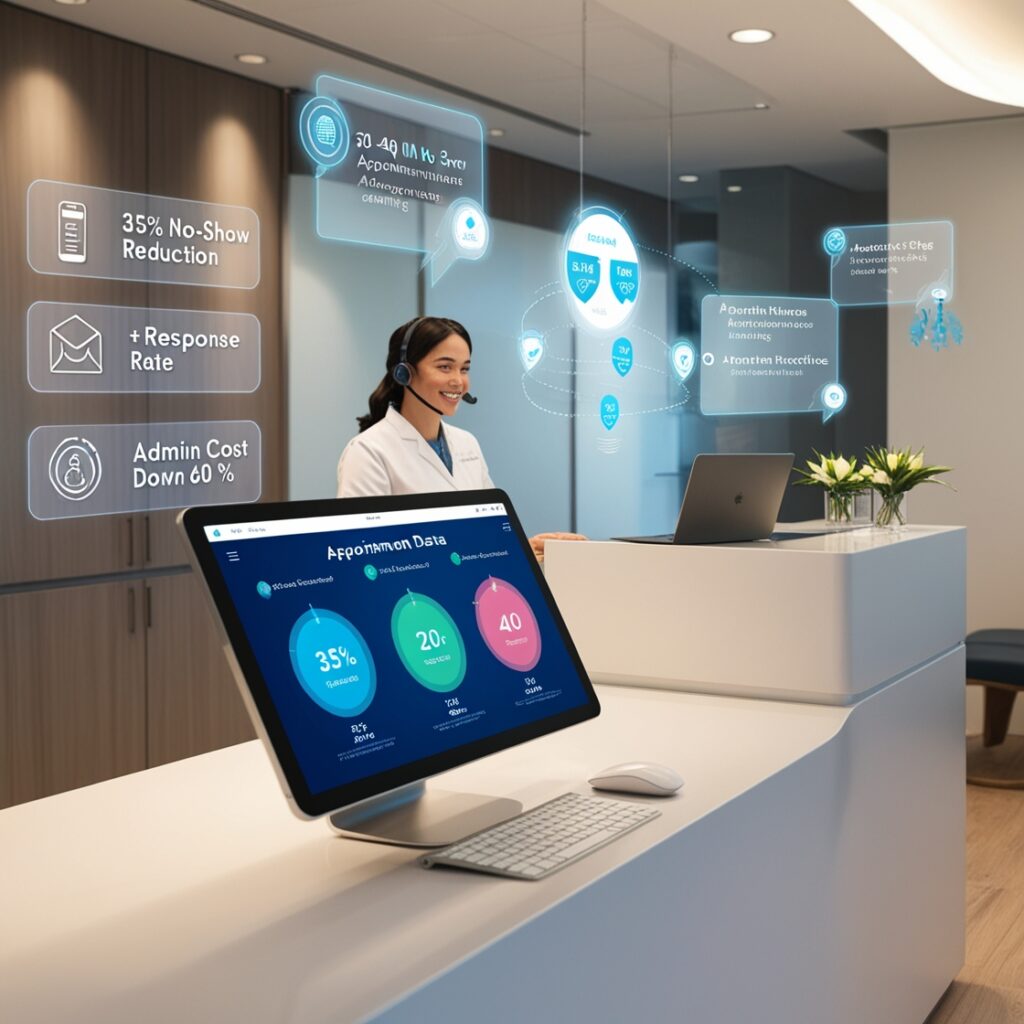
The personalization capabilities of AI extend to communication preferences and optimal contact timing. According to insights from DentalAIAssist, practices implementing AI-driven reminder systems report up to 35% reduction in no-show rates within the first six months. The technology adapts to individual patient response patterns, learning which communication methods and timing generate the highest confirmation rates for each patient segment.
Dynamic scheduling optimization represents another powerful AI application. These systems can automatically identify optimal appointment slots based on patient preferences and attendance probability, while simultaneously flagging appointments requiring additional confirmation efforts. The result is a more strategic approach to schedule management that maximizes both attendance rates and practice efficiency.
Do AI Reminders Work Better Than Human Calls?
Comparative studies consistently demonstrate superior performance of AI-powered reminder systems over traditional human-based approaches, though the advantages extend well beyond simple effectiveness metrics. AI reminders operate with perfect consistency, delivering messages at precisely optimal times without fatigue, mood variations, or scheduling conflicts that affect human staff performance.
The multi-channel capability of AI systems provides significant advantages over single-method human outreach. Modern AI platforms seamlessly integrate SMS, email, voice calls, and even social media messaging, adapting communication channels based on patient preferences and response history. This omnichannel approach ensures message delivery through the most effective medium for each individual patient.
Cost-effectiveness represents a crucial differentiator. While human reminder calls typically cost between $3-5 per contact including staff time and overhead, AI systems can deliver personalized reminders for pennies per message. This economic advantage becomes particularly pronounced for high-volume practices where hundreds of reminder calls monthly create substantial labor costs.
However, the most significant advantage lies in AI’s ability to process and act upon complex data patterns that humans simply cannot manage effectively. AI systems simultaneously monitor dozens of variables for each patient, adjusting reminder frequency, timing, and messaging based on real-time analysis. Research published on DentalAIAssist shows that AI reminders achieve 25-40% higher response rates compared to standard human calls, while reducing administrative workload by up to 60%.
The scalability factor cannot be understated. Human reminder capacity is inherently limited by staff availability and working hours, while AI systems operate continuously, sending thousands of personalized reminders simultaneously. This capability becomes essential during high-volume periods or when managing multiple practice locations.
What’s the Best Way to Prevent Dental No-Shows?
The most effective no-show prevention strategies combine multiple AI-driven approaches within a comprehensive patient engagement framework. Leading practices implement layered reminder systems that begin at appointment booking and continue through post-treatment follow-up, creating multiple touchpoints that reinforce appointment commitment.
Predictive analytics form the foundation of superior prevention strategies. By identifying high-risk appointments 7-10 days in advance, practices can implement intensive confirmation protocols including multiple reminder types, personal outreach, and even pre-appointment incentives. This proactive approach addresses potential no-shows before they occur rather than simply reacting to missed appointments.
Automated waitlist management represents another critical component. AI systems can instantly identify last-minute cancellations and automatically contact waitlisted patients with available slots, often filling appointments within minutes of cancellation. This capability not only reduces schedule gaps but also improves patient satisfaction by providing preferred appointment times.
Key prevention strategies include:
- Dynamic risk assessment: AI continuously evaluates appointment risk levels based on real-time data analysis
- Personalized communication timing: Messages sent when individual patients are most likely to respond
- Incentive automation: Automatic deployment of loyalty points or small incentives for confirmed high-risk appointments
- Flexible rescheduling options: AI-powered self-service rescheduling reduces barriers to appointment changes
- Treatment education sequences: Automated content delivery that reinforces treatment importance and value
Integration with practice management systems ensures seamless data flow and eliminates duplicate data entry. The most successful implementations combine AI automation with strategic human touchpoints, using technology to identify when personal intervention will be most effective.
How Much Money Do Dental No-Shows Cost?
The financial impact of dental no-shows extends far beyond obvious lost revenue, creating a complex web of direct and indirect costs that can severely impact practice profitability. Industry research indicates that practices with 10-15% no-show rates—considered average—lose between $40,000-$80,000 annually in direct revenue, depending on practice size and average treatment values.
Direct costs include:
- Lost production: Immediate revenue loss from unfilled appointment slots
- Fixed overhead allocation: Rent, utilities, and equipment costs continue regardless of patient attendance
- Staff compensation: Paying hygienists and assistants during unproductive time
- Rescheduling administrative costs: Staff time spent managing schedule changes and patient communication
Indirect costs often prove more significant:
- Treatment delay complications: Postponed care can lead to more complex, expensive treatments
- Patient relationship deterioration: Missed appointments often indicate declining engagement
- Schedule optimization challenges: Irregular attendance patterns make efficient scheduling difficult
- Staff morale impact: Constant rescheduling creates workplace stress and inefficiency
Tools such as DentalAIAssist provide comprehensive cost calculators that help practices quantify their specific no-show losses. These assessments typically reveal that practices underestimate true costs by 30-50%, as indirect expenses and opportunity costs are often overlooked.
The return on investment for AI-driven no-show prevention becomes compelling when viewed against these substantial losses. A practice investing $200-300 monthly in comprehensive AI reminder systems typically recovers this cost by preventing just 2-3 no-shows monthly, while the actual prevention rates often exceed 10-20 appointments per month.
Long-term financial benefits compound as improved attendance rates enable better schedule optimization, increased treatment acceptance rates, and enhanced patient lifetime value. Practices implementing comprehensive AI prevention strategies often report 15-25% improvements in overall schedule efficiency within the first year.
Measuring Success: Key Performance Indicators
Effective no-show reduction requires systematic measurement and continuous optimization based on concrete performance data. Leading practices track multiple metrics to ensure their AI investments generate maximum returns and identify areas for further improvement.
Primary metrics include:
- No-show rate percentage: Monthly tracking of missed appointments as percentage of total scheduled
- Revenue recovery: Dollar amount of prevented no-shows compared to historical baselines
- Reminder response rates: Percentage of patients responding to various communication types
- Schedule utilization: Percentage of available appointment slots actually filled with productive time
- Patient retention rates: Long-term engagement metrics showing improved loyalty
Advanced analytics platforms provide real-time dashboards that enable practice managers to monitor these metrics continuously and adjust strategies based on emerging patterns. The most sophisticated systems offer predictive forecasting that helps practices anticipate busy periods and potential scheduling challenges.
Call to Action
Ready to optimize your practice for maximum growth? Book a free practice optimization consulting session with our experts and discover personalized strategies to boost your revenue and patient satisfaction. Schedule your free 30-minute consultation today – no strings attached!